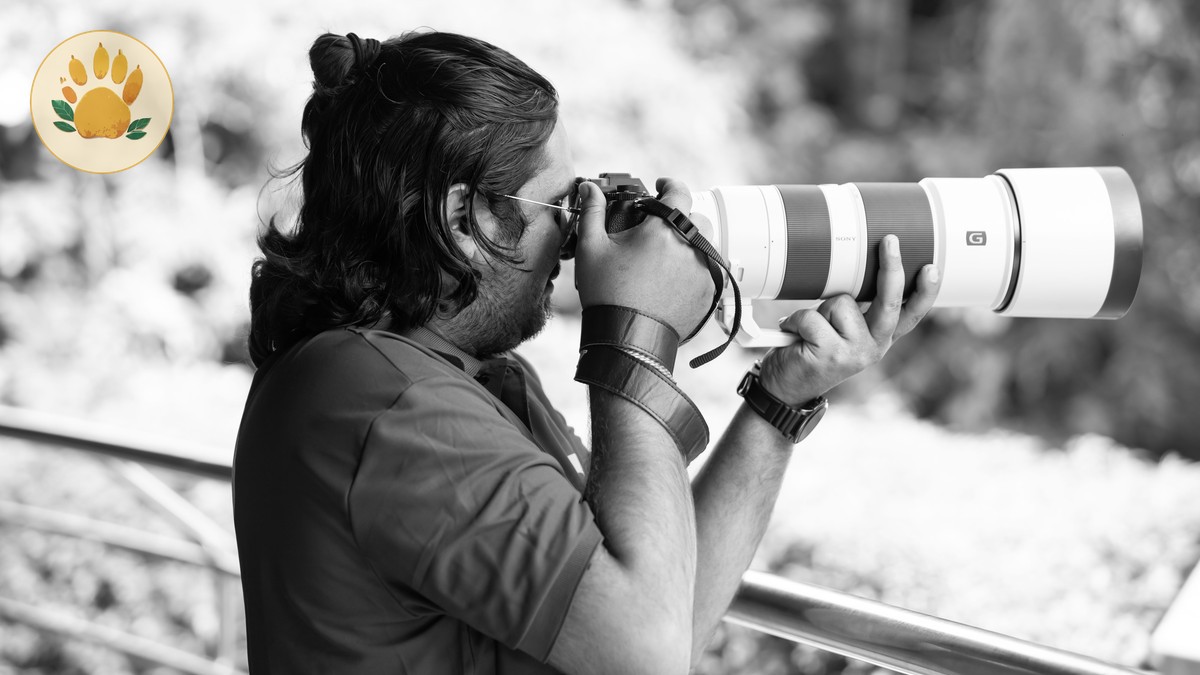
Yes, photographers can use beanbags in Kenya, and most wildlife guides expect it. A beanbag steadies a long lens on a vehicle window sill, a doorsill, a roof rail or a pop-top shooting hatch. The support is quiet, stable and fast to move, which is exactly what Kenya safari photography rewards. For SafariPure travelers, the beanbag is often the default answer for long lens safari photography.
Can Photographers Use Beanbags in Kenya?
Yes, photographers can use beanbags on Kenya game drives, and they are usually the simplest support for a long lens. Place the bag on a vehicle window sill, doorsill, roof edge or shooting hatch, then rest the lens or tripod collar on it. The setup is stable, quiet and quick to reposition.
This works because a beanbag moulds to the shape of the vehicle. It absorbs vibration from the engine and the track. Unlike a tripod, it does not take up seat space or require a clear patch of ground. Unlike a monopod, it stays put when you take your hand off the lens to adjust settings.
How to Use a Beanbag in a Safari Vehicle
Set the beanbag firmly on the vehicle’s ledge, keep the camera body behind the support, and rest the lens barrel or lens foot on top. Keep the bag partly flexible so it moulds to the surface and lets you pan. Attach the camera strap, brace your elbows and never leave equipment unsecured when the vehicle moves.
Here are seven setup tips for a reliable beanbag position on a shared vehicle:
- Pack the shell empty. A filled bag is heavy and awkward through airport security.
- Fill it locally to about 80 percent firmness. Overstuffed bags bounce; underfilled bags sag.
- Match the bag length to the sill. A 25 to 30 cm bag covers most Land Cruiser and safari van ledges.
- Rest the lens foot or barrel on the bag. Do not rest the camera body directly on it.
- Keep your camera strap looped around your hand or the seat frame when the driver moves.
- Practice panning with the engine off. Use one hand on the lens foot and one on the camera body.
- Confirm whether the camp or operator provides a filled bag before you book. Many do not.
The goal is a support that feels boringly stable. That predictability matters when a lion walks past the window and you need to follow it without overcorrecting.
Where to Buy or Fill a Camera Beanbag in Kenya
The lightest option is to bring an empty beanbag shell and fill it after landing. Supermarkets and local shops in Nairobi commonly sell rice or dried beans; published Kenya safari advice puts a roughly 1 kg fill at about KES 200. Ask the operator or camp whether staff can fill the bag before your first drive.
If you cannot find the right filler, ask your safari operator. Many camps keep rice on site for cooking, and a quick request is usually enough. A Kenya safari group departure packing checklist helps you remember the empty shell and the closure tape.
Beanbag Size, Filling and Packing Advice
A 25 to 30 cm beanbag suits most vehicle window sills and roof rails, while a larger bag offers more support for very long lenses but takes up more space in a shared vehicle. Pack the shell empty, fill it to roughly 80 percent firmness, and use a durable, double-stitched cover with a secure closure to reduce leaks.
For a 500mm or 600mm lens, a longer bag gives more contact with the sill. For a 100-400mm lens, a shorter bag is easier to lift between positions. The same bag can serve as a lap pad on bumpy roads, but keep the bottom clean so it does not scratch the vehicle paint.
Beanbags Versus Monopods and Tripods
Choose a beanbag for seated photography from a window, doorsill or roof rail because it supports a heavy lens while allowing fast horizontal movement. A monopod is more useful when standing through an open roof hatch. A tripod is rarely practical inside a shared safari vehicle because it is bulky, slow to reposition and vulnerable on rough tracks.
| Support | Best shooting position | Typical packed weight | Typical cost |
|---|---|---|---|
| Beanbag filled locally | Window sill, doorsill or roof rail in Maasai Mara, Samburu or Tsavo | About 1 kg fill | About KES 200 for local fill |
| Monopod | Open pop-top roof hatch, standing | 1 to 2 kg | Indicative USD 50 to 300 |
| Tripod | Outside the vehicle or at camp | 2 to 4 kg plus head | Indicative USD 150 to 800 |
The table shows why the beanbag wins most Kenya game drives. It costs the least, it packs the lightest, and it works from a seated position. Carry a monopod as a second option only if you know your vehicle has a stable roof hatch.
Which Kenya Safari Vehicles and Parks Suit Beanbags
Beanbags work across Kenya, but the best position depends on the vehicle. Maasai Mara pop-top Land Cruisers suit roof hatches and window ledges; Samburu and Tsavo vehicles commonly favour doorsill or window-frame support; and Lake Nakuru’s shorter, shaded drives may favour handheld shooting or a small beanbag.
For Maasai Mara photography, the classic setup is a small bag on the window ledge in a Land Cruiser. In open-sided vehicles, a bag on the doorsill gives you a lower angle that is excellent for cheetahs on the plains. Road transfers are different, so ask about the vehicle used for actual game drives, not airport pickup.
Beanbag Safety and Booking Questions
Do not assume a shared safari vehicle or camp supplies a beanbag. Before booking, ask whether one is available at every passenger window, whether the vehicle has a usable roof hatch, and whether the support suits a 500mm or 600mm lens. Keep a strap attached, avoid rigid mounting on rough tracks and secure the bag when changing sides.
If rain is forecast, check how Kenya safari vehicles handle rain so you know which window position stays dry. A wet beanbag still works, but a dry one gives you a cleaner lens cloth day.
When you are ready to plan a trip, ask SafariPure about vehicle layout before you book. A seat with a clean window ledge and a roof hatch is worth more than a bigger lens. That simple detail decides how much time you spend shooting and how little you spend holding a camera steady.
So what will you frame first through that steady lens: a lion at eye level from a window ledge, or a cheetah crossing open plains from a doorsill? Start your Kenya safari plan on the SafariPure contact page and bring the empty shell. The rest will be sorted by the vehicle, the camp, and the wildlife itself.